The Truth About Bottled Water vs. Filtered Tap Water
Walk down any grocery aisle in Ontario and you'll see stacks of bottled water — cases of it, branded jugs of it, "spring" and "alkaline" and "purified" varieties of it. For a lot of homeowners, bottled water feels like the safe, simple choice: you don't trust your tap water, so you buy the bottle. But when you actually compare the bottled water vs filtered tap water cost comparison in Canada, the math — and the environmental impact — tells a very different story. The truth is that most bottled water buyers are paying a premium for convenience and packaging, not for better water.
The Real Cost of Bottled Water
Bottled water is one of the most marked-up products on the planet. You're paying for packaging, transport, marketing, and the retailer's margin — not for the water itself. A family that drinks a few bottles a day can spend hundreds to over a thousand dollars a year on bottled water without really noticing, because the cost is spread across many small purchases at the checkout. It's death by a thousand small receipts.
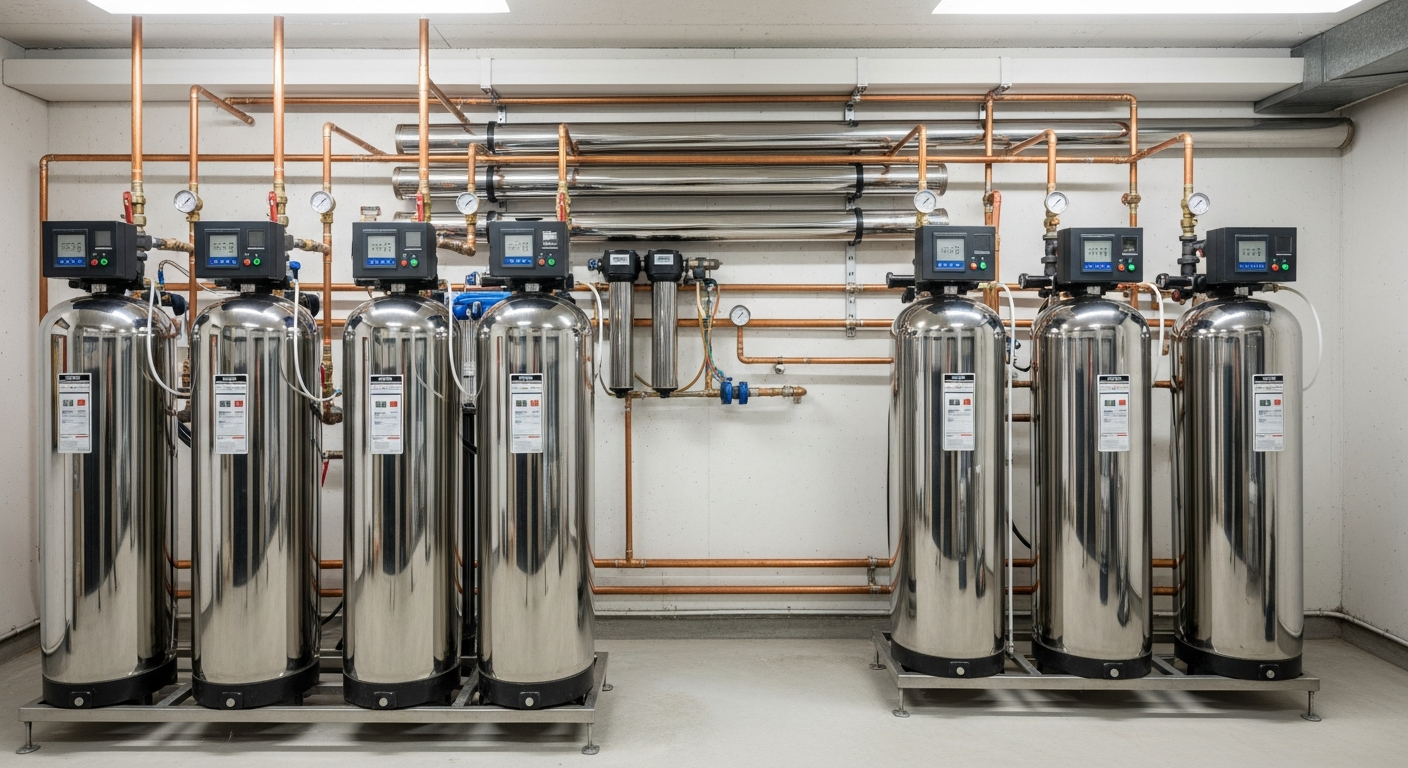
Compare that to a home filtration system. A quality reverse osmosis system has an upfront cost and modest annual maintenance, but after that the water is essentially free — you pay only for the water you already use. Over a few years, the bottled water vs filtered tap water cost comparison in Canada isn't even close: filtration wins by a wide margin, and the gap only grows the longer you own the system. Most filtration systems pay for themselves well within their warranty period when you account for the bottled water you stop buying.
The Environmental Impact of Bottled Water in Ontario
The cost isn't only financial. The environmental impact of bottled water in Ontario is significant and well documented. According to Environment and Climate Change Canada, single-use plastics are a major contributor to waste, and bottled water is a meaningful part of that stream. Most plastic bottles are used once and discarded, and even those that are recycled require energy to collect, transport, and reprocess — and many still end up in landfill or the environment.
The production and transport of bottled water also carry a carbon footprint that filtered tap water simply doesn't have. When you filter water at home, there's no packaging, no trucking, no refrigeration in a store cooler — just water from your own tap, cleaned on demand. For homeowners who care about reducing household waste, switching from bottled to filtered tap water is one of the highest-impact, lowest-effort changes you can make. A single RO system can replace hundreds or thousands of single-use bottles per year.
Is Filtered Tap Water Safer Than Bottled Water?
This is the question that drives most people to bottled water in the first place, and it's worth answering honestly. Is filtered tap water safer than bottled water? For a properly certified filtration system, the answer is generally yes — and at minimum, it's at least as safe, with far more transparency about what's actually been removed.
Here's why: bottled water quality can vary, and the labels don't always tell you what you think. "Spring water," "purified water," and "alkaline water" are marketing terms as much as they're descriptions, and bottled water is tested far less frequently than municipal tap water. Municipal tap water, by contrast, is tested constantly and regulated to strict standards. The issue with tap water isn't usually safety — it's taste, chlorine, and the occasional concern about older plumbing or specific contaminants like lead or PFAS.
A certified reverse osmosis system addresses exactly those concerns. It removes chlorine, lead, fluoride, PFAS, and a wide range of dissolved solids, giving you water that's purer than most bottled water — and you control the system, you know when the filters were last changed, and you can test the output yourself. With bottled water, you're trusting a label you can't verify. With a home RO system, you can see and maintain exactly what's removing contaminants from your water.
The Practical Switch
Making the switch is simpler than most people expect. A drinking water system installed under your sink gives you unlimited, on-demand purified water from a dedicated tap. For high-flow households that want bottled-water taste without the wait, our Brookwell AlkaPure 7 Tankless RO System delivers 800 gallons per day with alkaline remineralization, while the Brookwell AlkaPure 5 Under-Sink RO System is a dependable, economical classic.
Either way, you stop lugging cases from the store, stop generating plastic waste, and stop paying a premium for what is, ultimately, just water. The convenience of clean water on tap beats a case of bottles every time — and you never run out.
The Bottom Line
Bottled water is convenient, but it's expensive, wasteful, and not meaningfully safer than properly filtered tap water. A home filtration system gives you better water, lower long-term cost, and a much smaller environmental footprint. Once you've made the switch, most homeowners never go back — because the convenience of clean water on tap beats a case of bottles every time, and the savings show up in your wallet month after month.
If you're still on the fence, do the math for your own household: tally what you spend on bottled water in a month, multiply it by twelve, and compare that to the one-time cost of a home RO system. For most families the comparison is eye-opening, and it doesn't even account for the environmental cost or the hassle of storing and hauling bottles. Clean, pure water from your own tap isn't just the healthier and greener choice — over time, it's also the far cheaper one.