Signs Your Municipal Water Might Be Over-Chlorinated

"Why does my tap water taste like chlorine?" is one of the most common questions we hear from Toronto-area homeowners. The short answer is that municipalities add chlorine (and sometimes chloramine) to disinfect drinking water as it travels through miles of pipe to your home. It's necessary, it's regulated, and it keeps waterborne illness in check. But that doesn't mean you have to drink it, shower in it, or put up with the taste. Understanding what's in your water is the first step to fixing it, and the fix is simpler than most people expect.
Why Municipalities Chlorinate (and Why It's Regulated)
Chlorine has been used to disinfect public water supplies for over a century because it's effective, inexpensive, and leaves a residual that keeps water safe all the way to your tap. Without it, bacteria could multiply in the miles of distribution piping between the treatment plant and your kitchen. According to Health Canada guidance on chlorine and chloramine in municipal water, both are regulated within strict limits and are considered safe at the levels used for disinfection. The City of Toronto also publishes detailed water quality information — you can review the City of Toronto's published water quality information directly to see testing results for your area.
So is chloraminated tap water safe at regulated levels? From a public-health standpoint, yes. But "safe to drink" and "pleasant to drink" are two different things, and chlorine affects more than just taste — it can affect your skin, your hair, your laundry, and even the lifespan of rubber seals in your appliances.
The Signs Your Water Might Be Over-Chlorinated
You don't need a lab to spot the warning signs. If your water is carrying more chlorine than you'd like, you'll usually notice some combination of these:
- A strong swimming-pool smell from the tap, especially from hot water
- A chemical or bitter taste in coffee, tea, and drinking water
- Dry, itchy skin or brittle hair after showering
- Faded or stiff laundry and towels that feel harsh
- Rubber gaskets and seals in appliances degrading faster than expected
- Tap water that smells fine cold but tastes strongly chemical once heated
None of these mean your water is dangerous, but they do mean the chlorine is high enough to affect your daily life and your home. The question why does my tap water taste like chlorine in Toronto usually comes down to how close you are to the treatment plant and how recently the water was treated — chlorine levels can vary by neighbourhood and season, and they're often highest in homes nearest the disinfection point.
Chlorine vs. Chloramine: What's the Difference?
Some municipalities have switched from free chlorine to chloramine (a combination of chlorine and ammonia) because it lasts longer in the distribution system and produces fewer disinfection byproducts. The practical difference for homeowners is that chloramine can be harder to remove with basic carbon filtration and may require catalytic carbon media for effective reduction. If your municipality uses chloramine, that's worth knowing before you choose a filter — a standard carbon filter that handles free chlorine well may underperform on chloramine.
The other thing to know is that chloramine and chlorine both form byproducts when they react with organic matter in the water. These are regulated, but some homeowners prefer to reduce their exposure by filtering the water at the point of use. Either way, knowing which disinfectant your municipality uses helps you pick the right filtration media — and a quick call to your local water utility will usually get you a straight answer.
How to Remove Chlorine Taste from Tap Water
Once you know chlorine (or chloramine) is the issue, the fix is straightforward. Activated carbon is one of the most effective materials for adsorbing chlorine and the compounds that cause taste and odour. For drinking water alone, an under-sink system can handle it. But chlorine affects every tap in the house — your shower, your laundry, your skin — so many homeowners prefer a whole-home approach that treats the water once, at the point of entry.
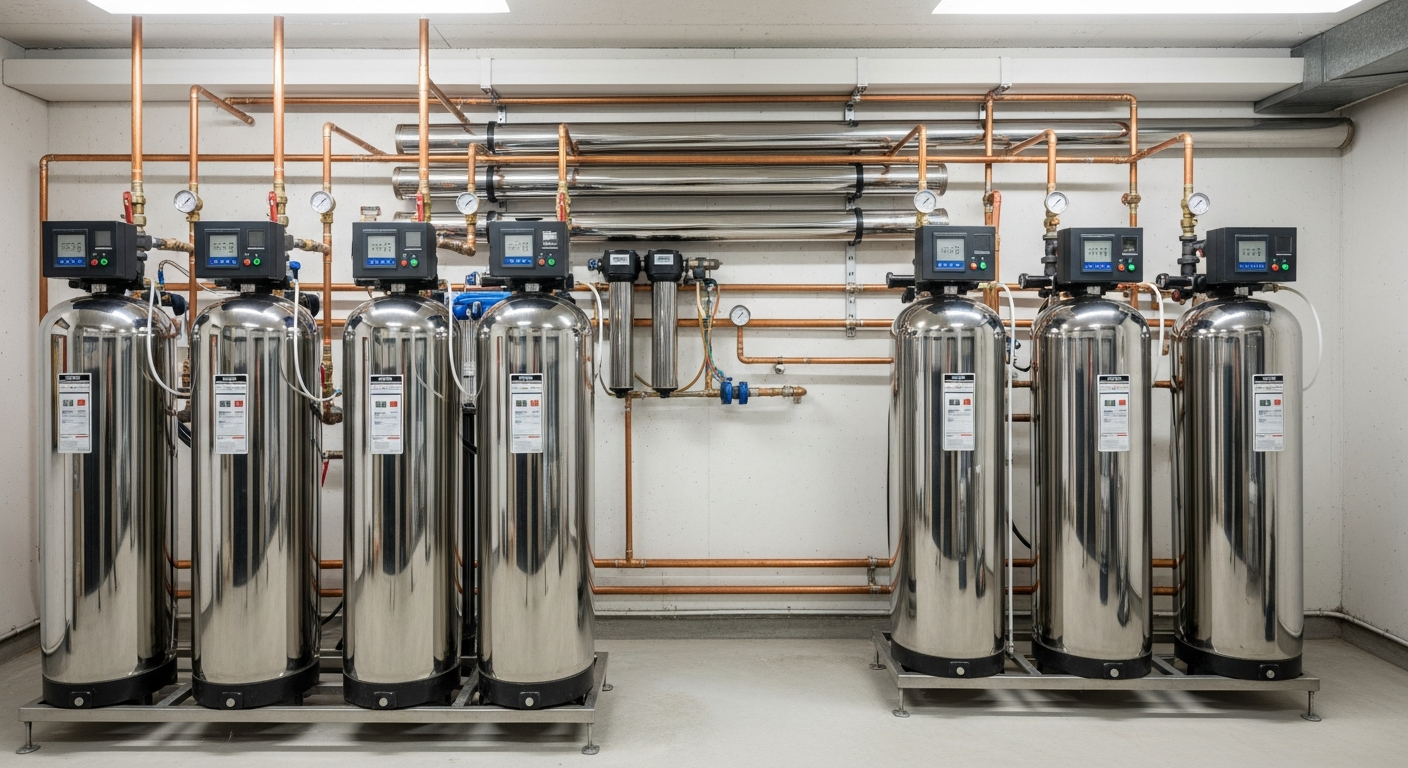
A drinking water system with carbon filtration handles the water you drink and cook with. For full-home protection, a Brookwell Whole Home Carbon Filter removes chlorine, chloramines, and sediment from every tap — so your showers, laundry, and drinking water all benefit. If you're in the Toronto area, you can also check the local water quality information for Toronto we've compiled to see what's typical in your neighbourhood.
The Bottom Line
Chlorinated municipal water is safe by design, but that doesn't mean you have to live with the taste, smell, and effects on your skin and home. The right filtration system removes chlorine at the source so you get clean, fresh water from every tap — and you stop showering in pool water. The best place to start is a free water test: we'll tell you exactly what's in your water and recommend a solution sized to your home, with flat-rate pricing and no pressure.
It's worth remembering that chlorine is in your water for a good reason — it keeps the supply safe as it travels to you. The goal of filtration isn't to undo the municipality's work; it's to remove the chlorine once the water has safely arrived at your home, so you get the safety benefit without the taste and skin downsides. A properly sized carbon system does exactly that, and it does it for every tap in the house at once.