The Hidden Costs of Hard Water on Your Home's Plumbing
If you live in the Greater Toronto Area, there's a good chance the water flowing through your pipes is hard. The cost of hard water damage to pipes in Ontario is something most homeowners never think about — until a water heater fails prematurely, a showerhead clogs with chalky scale, or an appliance dies years before it should. The signs of hard water damage in GTA homes are everywhere once you know what to look for, and the financial toll adds up quietly over time.
Hard water isn't a health hazard. In fact, Health Canada's Guidelines for Canadian Drinking Water Quality treat hardness as an aesthetic objective rather than a safety limit — the guideline notes that hardness above 200 mg/L (about 12 grains per gallon) is considered unacceptable on aesthetic grounds for many consumers. But "aesthetic" doesn't mean "harmless to your home." The dissolved calcium and magnesium that make water hard are the same minerals that build up inside your plumbing, your water heater, and every appliance that heats or uses water.
What Hard Water Actually Does to Your Plumbing
When hard water is heated — in your water heater, dishwasher, or washing machine — the dissolved minerals precipitate out and form a hard, chalky scale. This scale clings to the inside of pipes, narrowing them over time and restricting water flow. Inside a water heater tank, scale coats the heating element and the bottom of the tank, acting as an insulator. Your heater now has to burn more energy to heat the same volume of water, and the tank itself is exposed to accelerated corrosion.
This is exactly how hard water shortens water heater lifespan. A layer of scale just 1.6 millimetres thick can reduce a water heater's efficiency by roughly 12%, and thicker buildup cuts efficiency further while shortening the tank's service life. The same process attacks tankless heaters, coffee makers, humidifiers, and any fixture with a small orifice — which is why showerheads and faucet aerators are so often the first things to clog. Over years, the cumulative effect is a plumbing system that works harder, costs more to run, and fails sooner than it should.
The Signs of Hard Water Damage in GTA Homes
Before you ever open a wall or replace an appliance, hard water leaves visible clues. If you're seeing any of the following, your home is likely already dealing with scale buildup:
- White, chalky crust on faucets, showerheads, and glass shower doors
- Dishes and glassware coming out of the dishwasher cloudy or spotted
- Soap that won't lather properly, leaving a film on skin and hair
- Fading, stiff, or scratchy laundry even after a normal wash cycle
- A gradual drop in water pressure, especially at hot-water fixtures
- Strange popping or rumbling noises from your water heater (scale trapped at the bottom of the tank)
- Higher-than-expected energy bills with no other obvious explanation
None of these are emergencies on their own, but together they're the early warning signs of a problem that compounds over years. By the time a homeowner notices a real pressure drop or a failed heater, the internal scale has usually been building for a long time.
Putting a Number on the Damage
It's hard to put an exact dollar figure on hard water damage because it's spread across so many small costs, but the categories are clear. Scale forces water heaters to run longer and work harder, raising energy bills. It shortens the life of dishwashers, washing machines, and coffee makers. It etches and stains fixtures that then need to be replaced or professionally cleaned. And in severe cases, it narrows pipes to the point where repiping becomes the only fix — a job that can run into the thousands.
When you add up premature appliance replacement, higher energy bills, cleaning products to remove scale, and the eventual plumbing repairs, the cost of hard water damage to pipes in Ontario can easily reach thousands of dollars over the life of a home — far more than the one-time cost of treating the water at the source. The damage is slow and invisible, which is exactly why it goes ignored until it becomes expensive.
Why Prevention Beats Repair
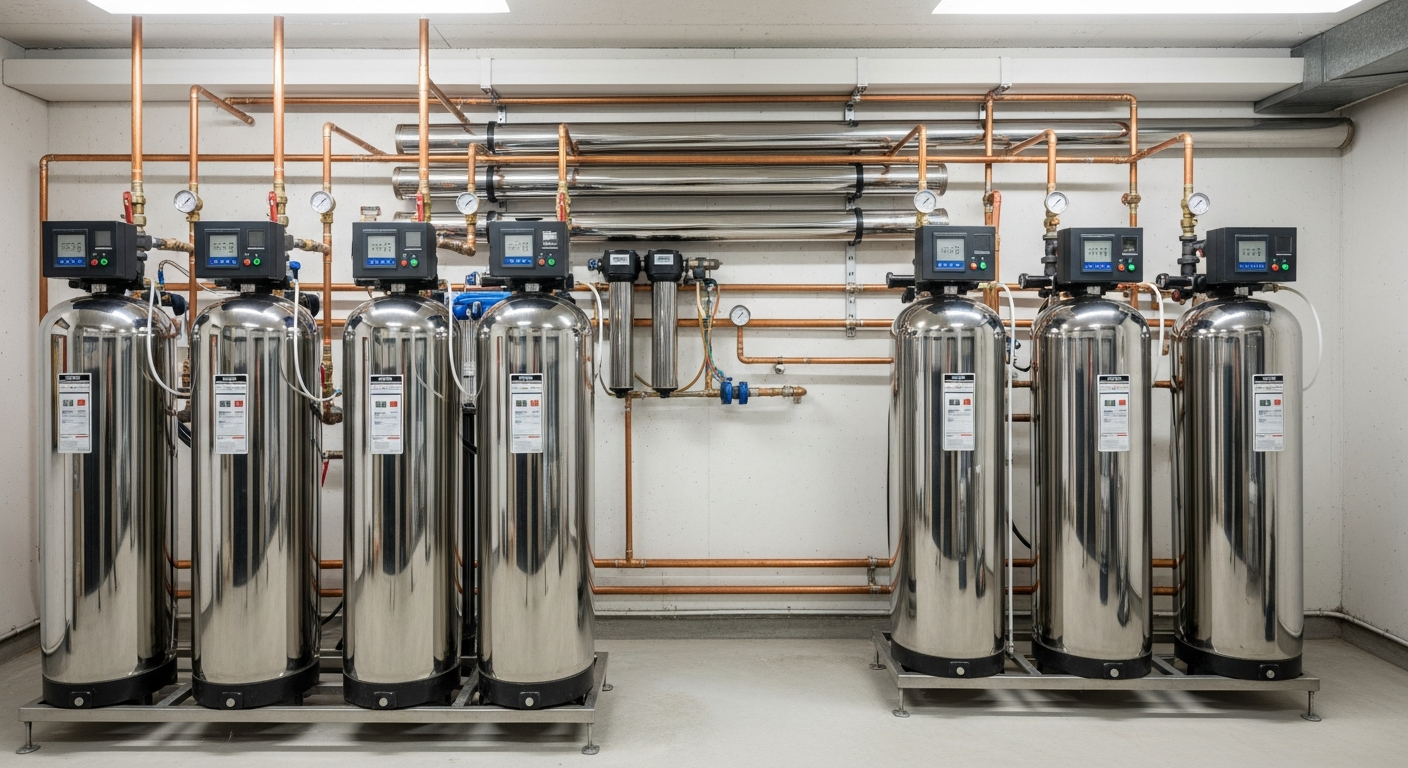
Once scale has formed inside a pipe or a water heater, removing it is difficult and sometimes impossible without replacing the component. The far more effective approach is to remove the hardness minerals before the water enters your home's plumbing. A properly sized whole-home water softener eliminates calcium and magnesium at the point of entry, so no scale ever forms downstream.
For homeowners who want to address both hardness and the chlorine taste common in municipal water, a Brookwell Whole Home Water Softener handles the hard minerals while protecting every pipe, fixture, and appliance in the house. Soft water also means less soap and detergent use, softer laundry, and no more scrubbing scale off shower doors. The savings on energy, soap, and appliance replacement often offset the cost of the system within a few years.
Find Out What's in Your Water
The first step is simply knowing what you're dealing with. Hardness varies by neighbourhood and water source, so the only way to know for sure is to test. We offer a free, no-obligation on-site water test across our entire service area in the GTA, and we'll show you exactly what's flowing through your pipes — along with a flat-rate quote if you decide treatment makes sense for your home.
Don't wait for a failed water heater or a clogged showerhead to find out you have hard water. The cost of doing nothing is always higher than the cost of fixing it early.